

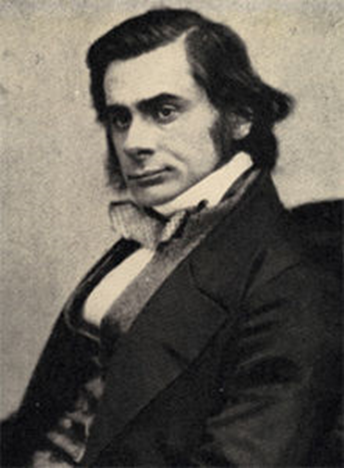
The Rise of T.H. Huxley: A Champion of Meritocracy and Science
In 19th-century Britain, where social mobility was stifled by nepotism and Anglican dominance, Thomas Henry Huxley emerged as a beacon of meritocracy. Born in 1825 above a butcher’s shop, Hal, as he was known, defied the odds of a system rigged against him. While Britain’s elite controlled Oxbridge, the Church, and civil service, Hal relied not on connections or wealth but on sheer talent and determination. His journey from poverty to prominence not only reshaped his own destiny but also transformed the scientific and cultural landscape of Victorian England.
Huxley’s early life was marked by self-education and relentless drive. Dropping out of school at 12, he taught himself multiple languages and eventually secured a medical scholarship. His big break came when he joined the Royal Navy as a surgeon on the HMS Rattlesnake, a position that allowed him to conduct groundbreaking research. Yet, the struggles of a scientist’s life were starkly evident—Hal endured an eight-year separation from his fiancée, Henrietta, because scientists, unlike wealthy gentlemen like Darwin, couldn’t afford to marry or support families.
The Victorian era, however, was on the cusp of change. The rise of meritocracy, marked by civil service exams and professionalized industries, created new opportunities for talent to rise above privilege. Huxley seized these opportunities with vigor, becoming a brilliant lecturer, writer, and advocate for science. His lectures attracted thousands, from working-class laborers to aristocrats, earning him the admiration of the public and the nickname “Darwin’s bulldog” for his fierce defense of evolutionary theory.
When Darwin’s Origin of Species was published in 1859, Huxley became its most ardent champion. His legendary debate with Bishop Samuel Wilberforce at Oxford in 1860 exemplified his fearless intellectual combat. When Wilberforce scoffed at the idea of evolution, asking whether Huxley traced his descent to an ape on his mother’s or father’s side, Huxley replied with biting wit: “I would rather have an ape for a grandfather than a man who uses great gifts to obscure the truth.”
Huxley’s legacy extends far beyond his scientific contributions. He symbolized the triumph of meritocracy over privilege, proving that talent and hard work could overcome even the most entrenched systems. As a founding member of the X-Club, a group of scientists dedicated to advancing “pure and free” science, he helped institutionalize a new era of intellectual rigor and secular inquiry.
In an age where connections often mattered more than talent, T.H. Huxley stood as a testament to the power of individual effort and the importance of ideas. His journey from obscurity to prominence reminds us that true progress emerges when society values ability over ancestry, and when courageous thinkers challenge the status quo. Huxley’s story is not just one of personal achievement but a broader reflection of the transformative power of meritocracy and science.
https%3A%2F%2Fwww.philosophyforlife.org%2Fblog%2F12-thomas-huxley-the-church-scientific-and-the-critique-of-eugenics






No Comments