

Freedom vs Control: Why Autonomy Is the Heart of Morality
A lion may eat you, but only a human can be truly praised—or blamed—for choosing not to.
Imagine a hungry lion stepping onto the street and devouring you in an instant. Most of us would never call the beast “immoral.” Yet when a criminal pulls a gun, kills you, and then eats you, we instantly label the act as morally reprehensible. The crucial difference lies not in the outcome but in the presence of choice.
A lion acts on instinct; it cannot refrain from attacking when hunger strikes. Humans, however, possess autonomy—the capacity to govern ourselves, to act against our own appetites, and to follow a self‑imposed law. Kant famously argued that this freedom to choose is the foundation of all moral worth. Without the ability to decide, actions become mere mechanisms, like a car moving only because you press the accelerator. Praise belongs only to agents who act voluntarily, not to automatons forced by circumstance.
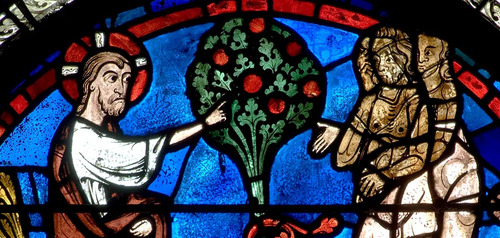
The biblical story of Eve illustrates the same principle. God could have barred the forbidden fruit, but He placed it within reach so that Eve might exercise genuine freedom. By allowing the possibility of sin, He made it possible to praise her for obedience. Humanity’s expulsion from Eden, therefore, is not a punishment but a gift—a release from a garden of robotic compliance into a world where we can create and obey our own laws.
From the earliest societies, this self‑legislation manifested in written codes, showing that freedom does not inevitably lead to chaos. Instead, people choose to bind themselves to shared moral standards, becoming both creators and subjects of those laws. This dual role is what makes human dignity distinct from animal instinct and mechanical obedience.
In the modern age, surveillance, automation, and corporate influence threaten precisely this autonomy. Governments and tech giants seek to shape behavior, promising safety and convenience in exchange for predictability. Yet safety without freedom is akin to a zoo: secure but lifeless. True humanity thrives on the willingness to question, dissent, and act against imposed directives.
Defending autonomy means recognizing that moral responsibility resides in our capacity to choose—not in deterministic forces. When we honor that freedom, we safeguard the very essence of what makes us human.
If this insight resonated, consider supporting our mission to spread philosophy that empowers autonomy and ethical reflection. Your engagement fuels the conversation that keeps humanity thoughtful, free, and morally vibrant.







No Comments