

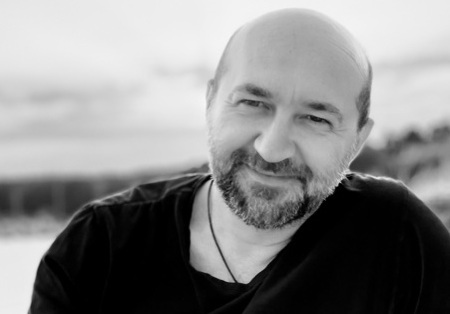
Luis de Miranda: Bridging Worlds with Philosophical Health and Crealectics
Discover how a Portuguese‑born thinker turned Swedish philosopher is redefining meaning in the digital age.
Luis de Miranda’s journey from Lisbon to Stockholm is a testament to the power of language, place, and purpose. Born to Portuguese parents under Salazar’s dictatorship, he fled to Paris at age three, where a severe respiratory reaction hinted at a deeper, psychosomatic resistance to the city’s oppressive atmosphere. Paris, with its “méchanceté” and concrete sprawl, left him yearning for nature and community. A brief sojourn in New York and Edinburgh, coupled with a PhD in 2017, eventually led him to Sweden—where he found a “Heimat” of crypto‑pagan respect for nature and a pace of life that nurtures creativity.
Key Insights
1. Language as Liberation
De Miranda began as a poet and novelist, using French to carve a space for himself in a foreign culture. His literary work—novels like Who Killed the Poet? and essays such as Being & Neonness—prefigured his philosophical inquiries. He coined terms like crealectics, anthrobotics, and hieropoiesis to capture the fluid intersections of creativity, technology, and sacred space. For him, words are not mere tools but performative incantations that can reshape reality.
2. Philosophical Health as a New Frontier
Drawing on ancient practices of deep listening (akroasis) and modern psychological insights, de Miranda founded the Philosophical Parlour. His approach blends analytic rigor with continental depth, offering “philosophical counseling” that complements traditional psychotherapy. He targets individuals who feel a lack of meaning or are navigating mental health labels, helping them cultivate deep listening, critical creativity, and a sense of philosophical possibility—the idea that thoughts can generate social force and personal transformation.
3. Crealectics: The Creative Real
At the heart of his theory is the Creal—a generative, Dao‑like source of possibility. Crealectics contrasts with analytic reductionism and dialectical synthesis, inviting people to reconnect with the creative flow that underlies all existence. In practice, this means guiding clients to expand their imagination, reframe their narratives, and align actions with a personally meaningful telos.
4. Global, Accessible, and Non‑Institutional
De Miranda offers online sessions worldwide, emphasizing that philosophical health need not be a luxury. He envisions a future where philosophical counseling is integrated into public health systems yet remains flexible enough to avoid bureaucratic rigidity. His work with corporations like Vattenfall demonstrates the potential to shift organizational cultures toward regenerative models.
Conclusion
Luis de Miranda’s blend of poetic language, cross‑cultural experience, and innovative theory invites us to rethink how we find meaning in a hyper‑connected world. By treating philosophy as a living practice—one that listens, creates, and heals—he offers a roadmap for anyone seeking deeper purpose without surrendering to the mechanistic narratives of modern life. If you’re ready to explore the Creal within, the Philosophical Parlour welcomes you to start a conversation that could transform your worldview and your everyday living.




No Comments