

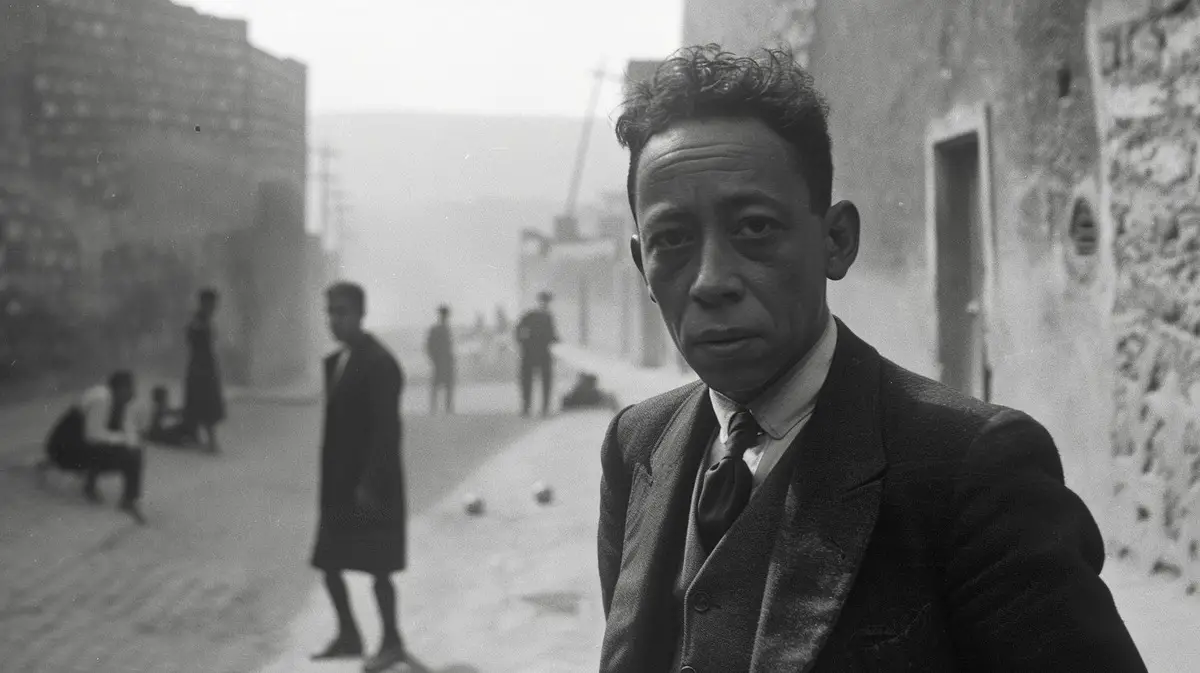
The beautiful game of football and the profound philosophy of existentialism may seem like an unlikely pairing, but for the renowned writer and philosopher Albert Camus, they were intimately connected. Camus’s love for football was more than just a passing interest – it was a reflection of his deep-seated passion for living life to the fullest. As he once said, “I’ve loved life, I’m hungry for it,” and football was one of the ways he satisfied that hunger.
Camus’s experiences playing football as a young man had a profound impact on his philosophical outlook. He believed that the game taught him valuable lessons about morality, obligations, and the human condition. In his own words, “what I know most surely in the long run about morality and obligations, I owe to football.” This may seem surprising, given that football is often viewed as a simplistic or even stupid pursuit, as the Argentine writer Jorge Luis Borges once suggested. However, for Camus, football was a complex and multifaceted game that revealed important truths about human nature and the search for meaning.
One of the key insights that Camus gained from playing football was the importance of freedom and creativity. The game, like life itself, is full of constraints and obstacles, but it is in overcoming these challenges that we find true freedom. As the philosopher Bernard Suits once said, a game is “the voluntary attempt to overcome unnecessary obstacles,” and this is precisely what makes it so liberating. By embracing the rules and challenges of the game, we are able to tap into our deepest desires and passions, and to live life on our own terms.
The concept of “quasi-object” developed by philosopher Michel Serres is also relevant here. A quasi-object is an entity that connects the subject and object, making them almost indistinguishable. In the case of football, the ball itself is a quasi-object that enables interpersonal relationships and creates a sense of community and shared purpose. The circulation of the ball, the movement of the players, and the rhythm of the game all come together to create a unique and dynamic experience that is greater than the sum of its parts.
The paradox of freedom is a fundamental aspect of human existence, and it is closely tied to the concept of play. On the one hand, we have the freedom to choose our actions and create our own meaning in life. On the other hand, we are also bound by the rules and constraints of the games we play, whether they be football, literature, or some other pursuit. This paradox is at the heart of Camus’s philosophy, and it is what makes life so rich and complex. As he once said, “we must imagine Sisyphus happy,” pushing his boulder up the mountain, not because he is forced to, but because he chooses to, and in doing so, finds a sense of purpose and fulfillment.
Ultimately, the connection between football and philosophy is not just about the game itself, but about the human experience. It is about the search for meaning, the pursuit of freedom, and the importance of living life to the fullest. As Camus so eloquently put it, “to exist is to play,” and it is in embracing this fundamental aspect of human nature that we can find true joy, creativity, and fulfillment. Whether we are playing football, writing, or simply living our daily lives, the key is to approach each moment with a sense of wonder, curiosity, and passion, and to never stop exploring, creating, and pushing beyond the boundaries of what is possible.
https%3A%2F%2Fdaily-philosophy.com%2Fjanning-to-exist-is-to-play%2F





No Comments