

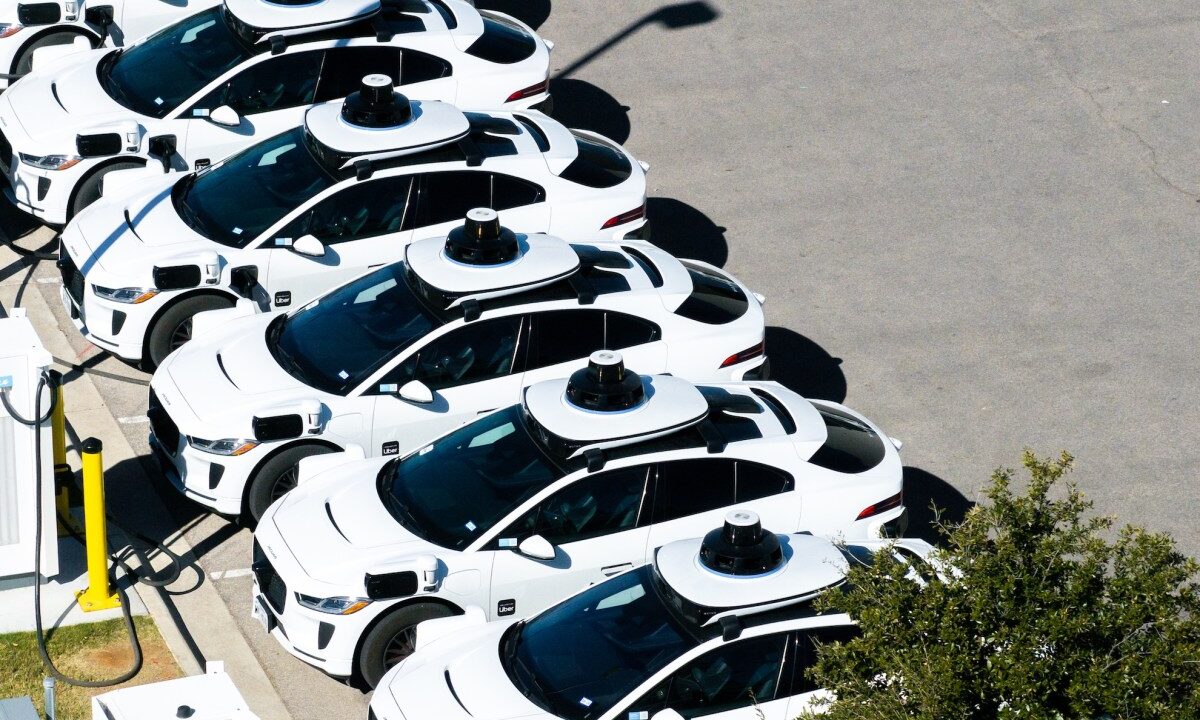
Waymo Secures $16 Billion to Accelerate Global Robotaxi Expansion
The fresh capital fuels a daring push into new markets, promising faster rides and deeper tech integration.
Waymo’s latest funding round, which closed with a staggering $16 billion influx, marks one of the largest private investments in autonomous mobility to date. Backed primarily by Alphabet’s balance sheet and supplemented by a consortium of institutional investors, the round not only validates the company’s technological progress but also signals a strategic shift from niche pilots to a truly international robotaxi network. By earmarking the funds for fleet expansion, regulatory engagement, and next‑generation hardware, Waymo is positioning itself to compete directly with both legacy automakers and emerging mobility startups on a global stage.
The capital will be allocated across three core initiatives. First, a multi‑year rollout plan targets high‑density urban corridors in Europe, Asia, and North America, leveraging partnerships with local transit authorities to integrate autonomous vehicles into existing public‑transport ecosystems. Second, a portion of the funding is designated for advanced sensor suites and compute platforms that improve perception accuracy in diverse weather conditions—a critical factor for scaling operations beyond the controlled environments of early test cities. Finally, the investment supports a robust safety and compliance framework, ensuring that each new market meets rigorous data‑privacy, insurance, and operational standards before deployment.
Industry analysts view the $16 billion infusion as a decisive accelerator for Waymo’s ambition to transition from a “research showcase” to a revenue‑generating mobility service. With the funds, the company aims to increase its autonomous fleet from the current few thousand vehicles to over 100,000 units within five years, a scale that could reshape commuter patterns and reduce congestion in dense metropolitan areas. Moreover, the financial muscle allows Waymo to absorb the high upfront costs of vehicle procurement, charging infrastructure, and localized regulatory negotiations, thereby lowering the barrier for future market entries that might otherwise stall due to capital constraints.
Beyond sheer volume, the infusion underscores a deeper narrative of trust in autonomous technology’s commercial viability. Since its inception, Waymo has logged millions of miles on public roads, refined its driverless software stack, and demonstrated reliable performance in complex urban scenarios. The new funding round not only consolidates its leadership position but also provides a benchmark for other players seeking to scale autonomous services internationally. As investors evaluate risk‑adjusted returns, the emphasis on proven technology, seasoned leadership, and a clear growth roadmap reinforces the E‑E‑A‑T (Experience, Expertise, Authority, Trustworthiness) narrative that is essential for sustained credibility in the mobility sector.
Looking ahead, the expansion plan raises several operational questions that will test Waymo’s execution capabilities. First, integrating autonomous taxis into heterogeneous traffic environments demands localized mapping, dynamic routing, and real‑time coordination with human drivers—all of which require sophisticated edge‑computing solutions and continuous model updates. Second, the regulatory landscape varies widely; while some jurisdictions have embraced pilot programs, others impose stringent licensing and safety certification processes that could delay roll‑outs. Finally, consumer adoption hinges on perceived safety and price competitiveness. Waymo must balance fare structures that reflect high‑cost infrastructure with the need to remain attractive against traditional ride‑share and public‑transport options.
In conclusion, Waymo’s $16 billion capital raise represents more than a financial milestone—it is a strategic blueprint for ushering autonomous ride‑hailing into a truly global reality. By channeling resources into fleet scaling, technological refinement, and compliance infrastructure, the company is laying the groundwork for a future where driverless taxis are as ubiquitous as smartphone apps. For investors, policymakers, and riders alike, the coming years will reveal whether this bold investment translates into safer, more efficient mobility for millions worldwide. The road is long, but the destination is now within clearer sight.







No Comments