

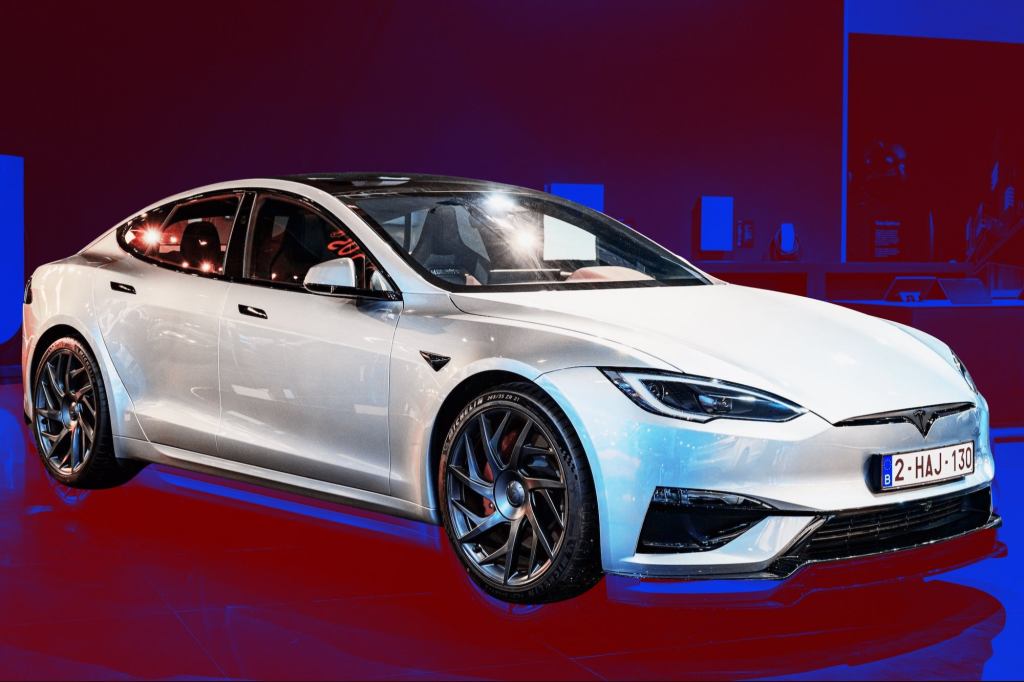
Tesla Halts Model S & X Production to Focus on Optimus Robots
Elon Musk’s bold pivot signals a new era where electric cars give way to humanoid automation.
The electric‑vehicle giant announced that the iconic Model S and Model X will cease production next quarter, freeing up the Fremont factory for a different kind of assembly line: the mass‑manufacture of Optimus, Tesla’s humanoid robot. Musk framed the decision as an “honorable discharge” for the two models, emphasizing that the company is “moving into a future that’s based on autonomy.”
Since its 2012 debut, the Model S has been Tesla’s flagship sedan, while the Model X SUV entered the market in 2015. Both have earned a loyal following, yet recent sales data show the newer Model 3 and Model Y now dominate the lineup, accounting for the bulk of revenue. By reallocating the sprawling Fremont plant—once the heart of Tesla’s car production—to robot assembly, the company aims to produce up to one million Optimus units, a scale Musk likened to the “biggest product of all time.”
Key takeaways for readers:
- Strategic shift: The move underscores Tesla’s belief that autonomous robotics will soon rival, if not surpass, electric vehicles as its core revenue driver.
- Production timeline: Conversion of the Fremont space begins immediately, with the first Optimus units slated for public sale by the end of next year, as Musk revealed at the World Economic Forum.
- Market impact: Existing Model S and X owners may see a dip in aftermarket support, while prospective buyers are nudged toward the more affordable Model 3 and Y.
- Long‑term vision: A million‑unit robot rollout hints at applications ranging from warehouse logistics to household assistance, positioning Tesla as a cross‑industry player in AI‑driven hardware.
For consumers, the news is a reminder that brand loyalty must adapt to rapid technological pivots. While the Model S and X will become rarer on the road, their legacy will likely boost the resale market, and the surge toward Optimus could open new job opportunities in robotics maintenance and software development.
In the broader automotive and tech landscape, Tesla’s decision challenges rivals to reconsider their own product roadmaps. If Optimus truly captures the imagination of both industry and the public, the era of cars as the primary symbol of innovation may be giving way to a future where humanoid machines handle the heavy lifting—literally and figuratively.
The takeaway? Tesla is betting that autonomy isn’t just a feature for cars; it’s the next frontier for the entire ecosystem, and the company is positioning itself at the forefront of that transformation.


No Comments