

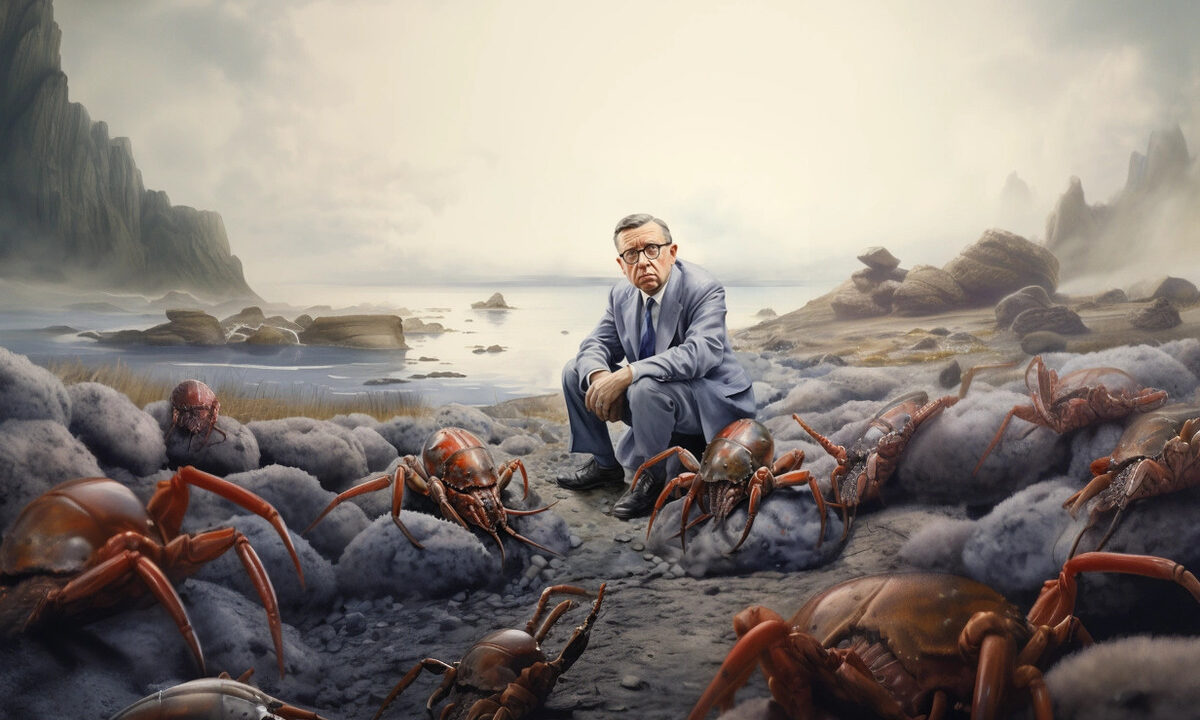
The human experience is replete with paradoxes, and one of the most intriguing is the relationship between fear and longing. It’s a dichotomy that has puzzled philosophers and psychologists for centuries, and one that Jean-Paul Sartre’s peculiar encounter with crustaceans sheds light on. In 1935, a bad trip triggered Sartre’s deep-seated fear of sea creatures, surrounding him with crabs and lobsters that persisted even after the drug wore off. As he grew accustomed to their presence, he began to talk to them, and they became a source of comfort, albeit a hallucinatory one.
This bizarre episode raises a profound question: do the things we fear represent the things we most long for? Sartre’s experience suggests that, at a subconscious level, our fears can be a manifestation of our deepest desires. In his case, the fear of crustaceans was a tangible representation of his abstract fear of losing his friends and being alone. By confronting and embracing his fear, Sartre was able to overcome it and, in the process, gain insight into the human condition.
Existentialism, a philosophy that Sartre championed, posits that existence precedes essence, meaning that our choices shape and define us. This perspective suggests that we have agency over our fears and can choose to overcome them. In contrast, essentialism implies that our fears are predetermined and outside of our control. However, Sartre’s story and the concept of existentialism encourage us to take responsibility for our fears and to confront them head-on.
The fear of loss and the fear of love are intimately connected. Love and connection always come with the risk of loss, and it’s this risk that can be daunting. Some people may try to protect themselves from potential pain by creating a shield, but this can lead to alienation and a lack of genuine connections. Others may choose to embrace love and connection, despite the risks, and it’s this choice that can lead to a more fulfilling life.
Sartre’s experience with the crustaceans teaches us that fear doesn’t always represent danger, but rather a hidden longing for connection and love. By accepting the transience of life and the risks that come with it, we can begin to overcome our fears and embrace the beauty of human connection. As the saying goes, “the only way out is through,” and it’s by confronting our fears that we can truly begin to live.
In the end, Sartre’s story encourages us to reexamine our relationship with fear and to consider the possibility that our fears may be a manifestation of our deepest desires. By embracing this perspective, we can begin to take responsibility for our fears and to make choices that lead to a more authentic and fulfilling life. As we navigate the complexities of human existence, it’s essential to remember that our choices have the power to shape and define us, and that it’s never too late to confront our fears and to choose a different path.
https%3A%2F%2Fdaily-philosophy.com%2Fkoukouves-sartre-and-the-lobsters%2F







No Comments