

Rivian’s Autonomous Leap: Hands-Free to Eyes-Off by 2026
Rivian is sprinting toward a driverless future, challenging Tesla and GM with a bold tech roadmap unveiled at its first Autonomy & AI Day.
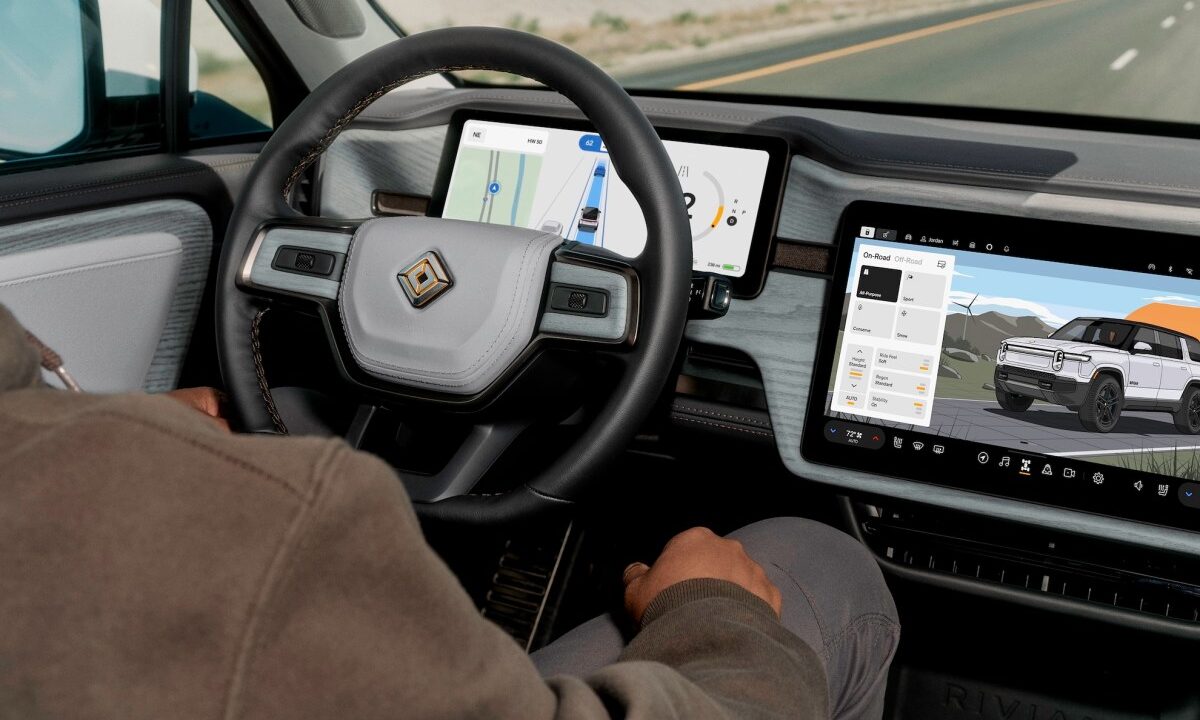
In a high-stakes bid to outpace rivals, CEO RJ Scaringe detailed a massive software and hardware overhaul. The cornerstone is “Universal Hands-Free,” launching in early 2026. This feature will expand beyond highways to surface streets across the US and Canada, covering over 3.5 million miles. It promises true point-to-point navigation: get in at home, drop the pin, and the car handles the trip. Rivian will charge a one-time $2,500 fee or a $49.99 monthly subscription.
But the real disruption comes next. Scaringe unveiled an ambitious march toward “personal L4” autonomy—the SAE level where the car drives itself without human oversight in specific areas. After mastering personally owned vehicles, Rivian eyes the lucrative ride-hail market, setting the stage for a future showdown with Waymo.
Hardware is the bedrock of this strategy. Rivian is ditching a rules-based approach for a “large driving model”—an AI brain similar to a large language model but trained on real-world driving. It’s paired with a massive hardware upgrade: a custom 5nm processor built with Arm and TSMC. Dubbed the third-generation Autonomy Computer (ACM3), it processes 5 billion pixels per second and debuts on the mass-market R2 SUV in late 2026.
However, there’s a critical catch: ACM3 requires a lidar sensor mounted at the top of the windshield. This provides the 3D spatial data and redundancy needed for “superhuman” sensing. The result? Vehicles equipped with lidar will unlock eyes-off and unsupervised driving. R2s built before late 2026 without this hardware will likely plateau at the hands-free level.
This move signals a clear maturation in the EV arms race. While competitors lean heavily on cameras alone, Rivian is hedging its bets on sensor fusion. By combining lidar’s precision with a native AI driving model, they are building a safety net designed to handle the unpredictable chaos of the road. For Rivian, the goal isn’t just to match human drivers; it’s to exceed them.






No Comments