

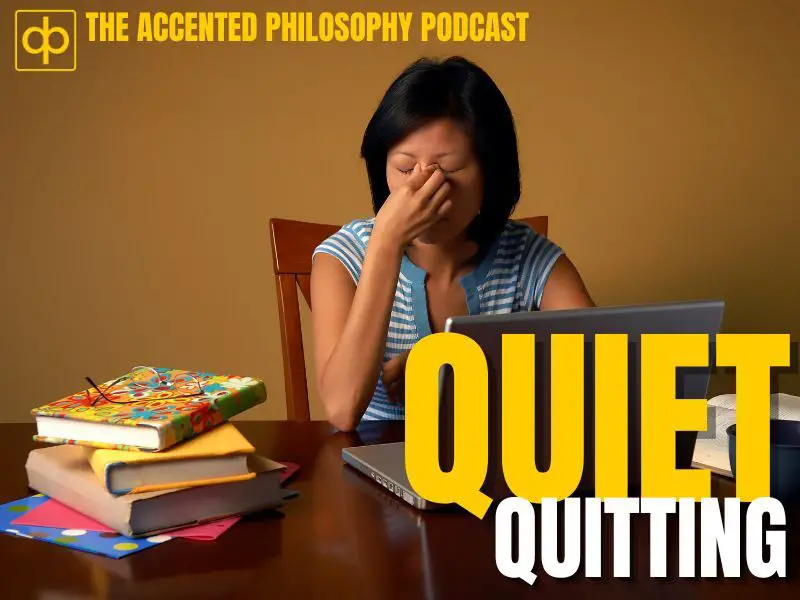
The Price of Your Peace: Is Quiet Quitting the Answer or the Trap?
The digital tally you see reflects a silent ledger: articles read, time invested. Every click, every engagement, supports a world of thought, a conversation about the wisdom that sustains us. Yet, as we scroll through our daily lives, a new boundary is being drawn in the sand of the modern workplace: the rise of “Quiet Quitting.”
This is the subject of a new season of the Accented Philosophy Podcast, where we explore the trend of doing strictly what is required and nothing more. For many, it isn’t laziness; it is a desperate bulwark against exploitation, meaningless tasks, and the crushing weight of a job that demands a soul but offers no spiritual sustenance in return. It is the ultimate act of setting boundaries when the balance of power feels tipped against you.
But does this tactical retreat truly reclaim our lives?
While setting limits is essential for mental health, the danger of Quiet Quitting lies in its passivity. It treats the symptom—burnout and exploitation—without necessarily healing the disease of a vocation devoid of meaning. One can be fully present and disengaged simultaneously, checking off boxes while the inner self atrophies.
True fulfillment rarely comes from merely resisting what we don’t want, but from ruthlessly pursuing what we do. It requires asking the hard question: Is this silence a temporary shield, or a permanent residence? The goal isn’t just to endure the hours between 9 and 5, but to ensure those hours contribute to a life well-lived, not just a paycheck well-collected.







No Comments