

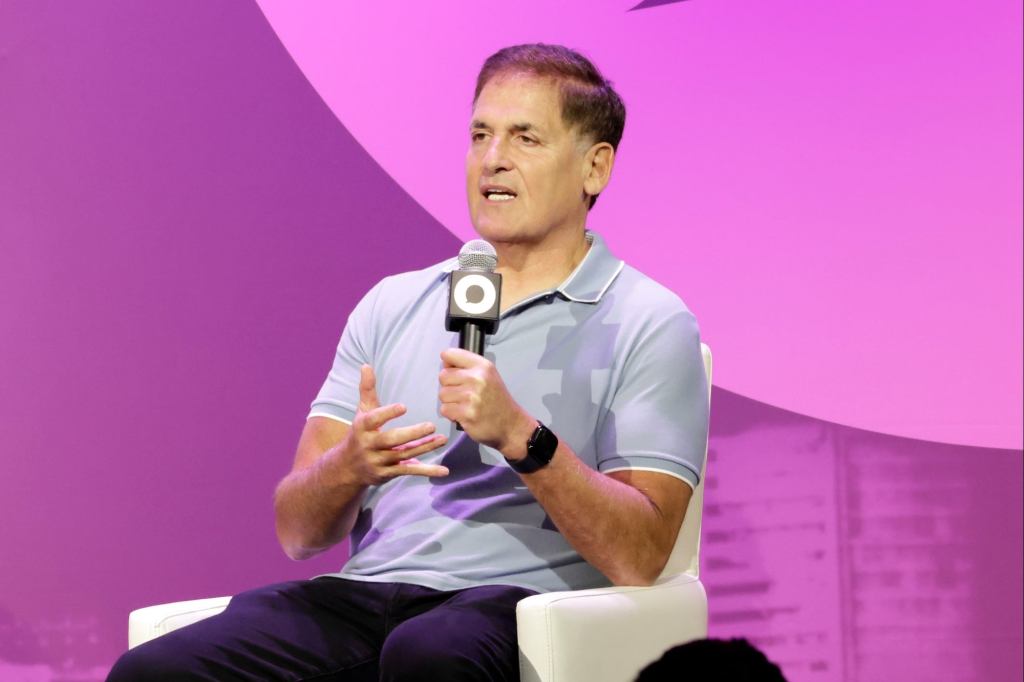
Mark Cuban:Why Every Employee Should Own a Piece of the Company
In a recent post on X, Mark Cuban, the billionaire entrepreneur and owner of the Dallas Mavericks, sparked a conversation about wealth distribution and employee equity. Cuban, whose net worth stands at $9.1 billion, believes that stock options should no longer be a perk reserved for top executives. Instead, he advocates for a system where every employee, from the C-suite to the factory floor, owns a stake in the company’s success. This isn’t just a hypothetical idea—Cuban has a proven track record of sharing the wealth, and he argues that doing so benefits both employees and employers alike.
Cuban points to the stock market as the driving force behind the dramatic increase in billionaire wealth over the past decade. According to an Oxfam report, billionaires have added a staggering $33 trillion to their combined wealth since 2015. But Cuban highlights an often-overlooked reality: much of this growth is funded by retail investors and 401k plans. “The better question,” he writes, “is why we are not giving incentives to companies to require them to give shares in their companies to all employees, at the same percentage of cash earnings as the CEO?”
Imagine a world where every employee, regardless of their role, receives stock options equivalent to a percentage of their salary, just like CEOs do. If a CEO gets a stock award worth 100% of their salary, every worker, from entry-level to senior management, would also receive stock options worth 100% of their own pay. This idea isn’t just theoretical—Cuban has implemented similar practices in his own businesses, with remarkable results.
Tech giants like Apple, Salesforce, Adobe, and Tesla already offer stock purchase plans, allowing employees to buy shares at a discount. For example, Apple employees can purchase stock at a 15% discount, contributing up to 10% of their salary or $21,250 annually. However, these programs often come with limitations, and executives still receive a far greater percentage of shares relative to their salaries. In 2024, nearly 78% of Apple CEO Tim Cook’s $74.6 million pay package came from stock awards, totaling $58.1 million.
Cuban’s argument goes beyond fairness; it’s rooted in performance and morale. When employees have a financial stake in their company’s success, they’re more likely to think like owners. JPMorgan Workplace Solutions backs this up, noting that stock options can lead to improved productivity and higher employee morale, especially when the company performs well.
Cuban’s commitment to sharing wealth isn’t new. In 1990, when he sold his first company, MicroSolutions, he gave each of his 80 employees a $15,000 bonus. Later, when he sold Broadcast.com to Yahoo for $5.7 billion in 1999, over 90% of his employees became millionaires. “In every business I’ve sold,” he wrote last year, “I’ve paid out bonuses to every employee there more than a year.”
The idea of equitable stock options is more than just a billionaire’s opinion—it’s a roadmap to building a more engaged, motivated, and prosperous workforce. As Cuban puts it, “If you share equity immediately in a meaningful way, so that everybody rises.” The question now is: Will companies follow his lead?







No Comments