

Islamic Governance
The tension between Western and Islamic conceptions of governance and human rights is a complex issue that requires a nuanced understanding of the underlying values and principles of each system.
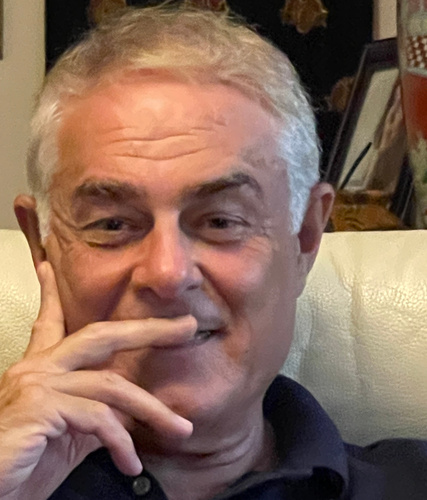
Professor Wael B. Hallaq, a leading scholar of Islamic law and Islamic intellectual history at Columbia University, sheds light on this topic, arguing that the modern state and Islamic governance are based on fundamentally different moral orders. According to Hallaq, the modern state forms subjects from the outside through coercion and discipline, whereas Islam forms them from the inside through a process of ethical self-cultivation. This difference in approach is rooted in the fact that the modern state is based on a secular conception of power, whereas Islamic governance is grounded in a religious and ethical framework.
Hallaq also notes that the concept of human rights is not universal, but rather a product of Western experiences and power dynamics. He argues that each society or culture should be allowed to develop its own concept of human rights, rather than being forced to adopt a Western-style system. This approach recognizes the diversity of human experiences and the importance of cultural and religious contexts in shaping our understanding of human rights.
The interview with Hallaq highlights the challenges of adapting Islamic law to modern Western-style legal systems. He argues that the Sharia has built-in mechanisms for change and adaptation, but that these mechanisms are often misunderstood or ignored by Western scholars. Hallaq also emphasizes the importance of understanding the historical and cultural context of Islamic law, rather than trying to impose Western conceptions of human rights and governance on Muslim societies.
Ultimately, Hallaq’s insights offer a nuanced and thought-provoking perspective on the complex issues surrounding Islamic governance and human rights. By recognizing the diversity of human experiences and the importance of cultural and religious contexts, we can work towards a more inclusive and equitable understanding of human rights and governance. As Hallaq notes, “history is not just a series of events, a progressive linearity that leaves behind dead humans and events. History is also an ethical time, and ethical time is timeless.”







No Comments