

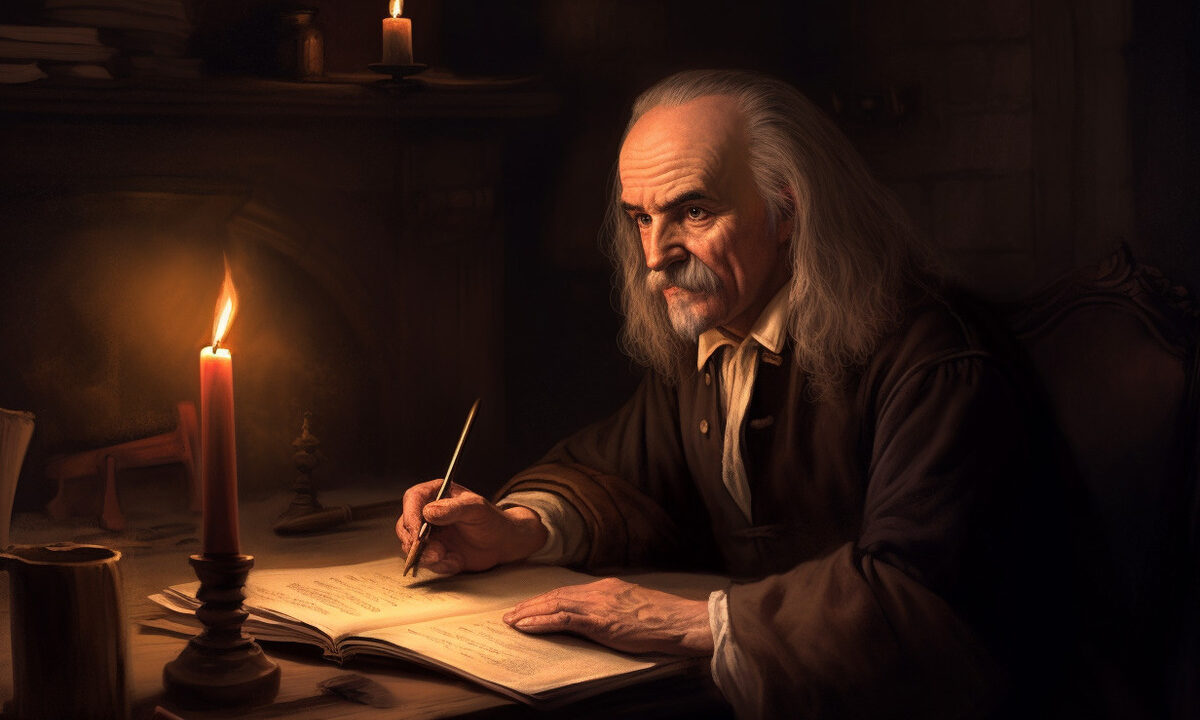
The philosopher you misquote was actually defending you.
Thomas Hobbes wanted debates on politics and religion to go beyond their famous soundbites.
If you’ve ever used the phrase “nasty, brutish, and short” to describe human nature, you might be misreading Thomas Hobbes. In his masterwork Leviathan, this line is often taken out of context to paint humans as inherently savage. But a deeper look reveals a more nuanced thinker—and a lesson about how we use quotes to avoid real understanding.
First, let’s address the context. In the 17th century, Hobbes began his political philosophy by considering the “state of nature”—what humanity looks like without laws, government, or society. He starts with a surprising premise: humans are naturally more equal than we think. As he wrote, “Nature hath made men so equal, in the faculties of body, and mind… the difference between man, and man, is not so considerable.” Even the weakest person can kill the strongest through cunning or alliance.
This equality creates unique risks. Hobbes identifies three main causes of conflict: competition for scarce resources, distrust (diffidence), and the desire for glory. However, Hobbes never states that violence is our inevitable, first impulse. In fact, he clarifies that the state of nature is less a bloody free-for-all and more a precarious peace. He writes that people generally “mind their own business” and are “contented with his share.” The threat of violence exists, but it isn’t the default.
The famous line—life “solitary, poore, nasty, brutish, and short”—doesn’t describe our default nature, but the potential outcome when security fails. Think of it like locking your door at night. You do it out of caution for a possible threat, not because you believe all humans are inherently murderous. Hobbes makes this exact point: just because you lock your door, “neither of us accuse man’s nature in it.”
Why does this misinterpretation persist? It’s part of a broader trend where we use “gotcha” quotes (like Adam Smith’s “invisible hand”) as substitutes for reading the source material. We reduce complex thinkers to caricatures: Hobbes the pessimist versus Rousseau the optimist. But real philosophy demands nuance. If we read the book, we see Hobbes wasn’t calling humans evil. He was arguing that without a “common power” to enforce covenants, our natural equality and fear could spiral into conflict.
By misunderstanding him, we miss his core point: we need political structures not because we’re monsters, but to protect the fragile peace we naturally inhabit.
When we reduce deep ideas to viral soundbites, we lose the wisdom they actually offer. Reading the source reminds us that philosophy isn’t about confirming biases; it’s about challenging them. So next time you quote a philosopher, ask yourself: are you sharing their idea, or just the version that’s easy to repeat?







No Comments