

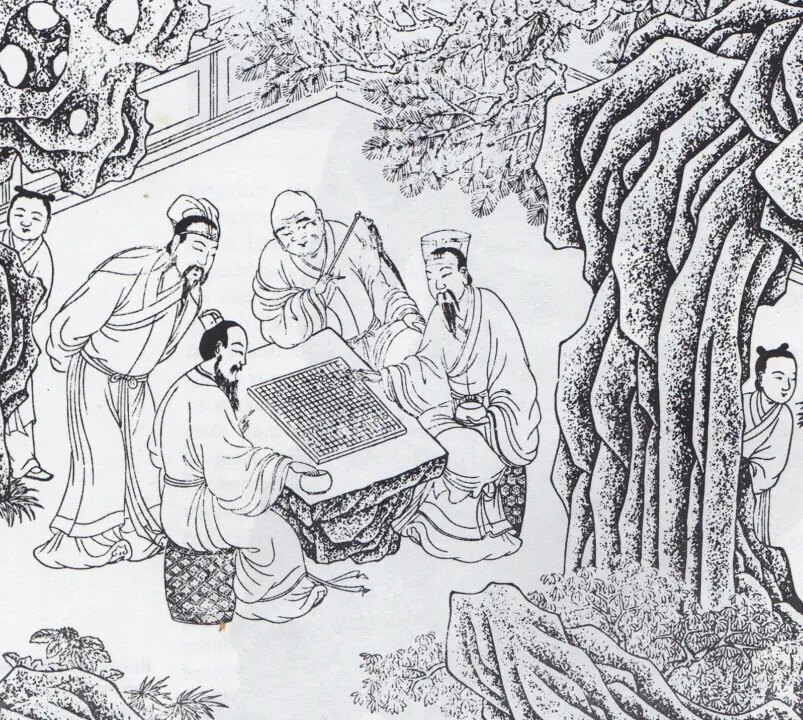
In Hermann Hesse’s seminal novel, “The Glass Bead Game,” the author weaves a complex tapestry of philosophical and cultural influences, drawing heavily from Chinese philosophy and religion. This utopian tale of a scholarly province, Castalia, is replete with references to Eastern thought, particularly in the character of Joseph Knecht, who embarks on a journey of self-discovery and “awakening” under the guidance of the enigmatic Elder Brother. The Elder Brother, a master of Chinese arts and philosophy, introduces Knecht to the ancient traditions of China, including the I Ching, calligraphy, and the game of Go.
The game of Go, with its simple yet profound rules, serves as a metaphor for the complexities of life and the universe. Its connection to Chinese culture and philosophy is deeply significant, as it embodies the principles of harmony, balance, and strategy. Hesse’s fascination with Chinese culture is evident throughout his work, from his earlier novel “Siddhartha” to his “Journey to the East,” where he explores the idea of a spiritual quest for enlightenment.
The Chinese writing system, with its logographic characters, also plays a crucial role in Hesse’s conception of the Glass Bead Game. Unlike phonetic alphabets, which represent sounds, Chinese characters convey meaning directly, allowing for a more nuanced and multifaceted expression of thought. This unique aspect of the Chinese language is reflected in the Game’s use of hieroglyphs and symbols, which require a deep understanding of their underlying meaning and context.
Through Knecht’s journey, Hesse raises important questions about the nature of knowledge, culture, and identity. As Knecht delves deeper into the mysteries of the Glass Bead Game, he begins to question the hierarchical structure of Castalian society and his own place within it. The influence of Chinese culture and philosophy serves as a catalyst for his “awakening,” allowing him to see the world from a new perspective and to reevaluate his values and priorities.
Ultimately, Hesse’s “The Glass Bead Game” is a thought-provoking exploration of the human condition, one that challenges readers to consider the interconnectedness of knowledge, culture, and philosophy. As we navigate the complexities of our own world, Hesse’s novel offers a powerful reminder of the importance of embracing diversity, questioning assumptions, and seeking wisdom in the most unexpected places. By examining the intersections of Eastern and Western thought, we may uncover new insights into the nature of reality and our place within the grand tapestry of human experience.
https%3A%2F%2Fdaily-philosophy.com%2Fhesse-glass-bead-game-3%2F








No Comments