

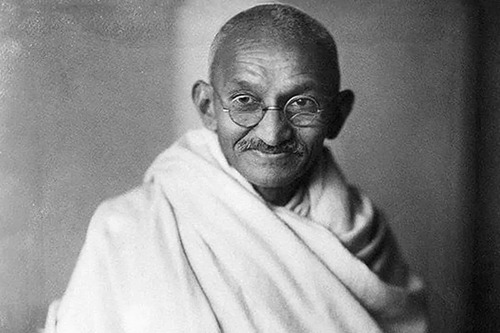
The Flawed Immortality of Mahatma Gandhi
He was no saint, yet he showed us that even broken souls can achieve greatness.
October 2nd marks the birthday of Mohandas Karamchand Gandhi, the Mahatma, a figure whose public imagination in the 1982 film often glosses over the gritty reality of his humanity. We tend to canonize our heroes, placing them on pedestals polished by history. Gandhi, however, offers a radically different lesson. In his autobiography, “The Story of My Experiments With Truth,” he meticulously documented his failures—from a marriage at thirteen to his strict dominance over his family. He was a man of his time, flawed and contradictory, yet his legacy shines precisely because it wasn’t built on sainthood, but on radical integrity.
Consider the architecture of his life: revolution built on the foundation of failure. Gandhi’s path was paved with fasting, imprisonment, and hunger strikes—actions that unlikelier, softer leaders would have avoided. Like Tolstoy or Mother Teresa, his personality had sharp edges, yet these imperfections fueled his drive rather than stifling it. This reframes our understanding of leadership. We often mistake agreeability for virtue, but history’s greatest changes were driven by those willing to endure the discomfort of their own convictions. Gandhi proved that a messy life does not negate a profound impact.
In today’s landscape, dominated by leaders who prioritize self-enrichment over collective dignity, Gandhi’s memory serves as a sharp counter-narrative. The presence of amoral figures in power suggests a systemic rot, but Gandhi reminds us that this is not inevitable. The existence of the Mahatma—one man facing the wrath of an empire with silent courage—proves that a better caliber of leadership is not only possible but necessary.
True change demands active participation. We cannot passively hope for saviors; we must embody the courage to dismantle the demeaning systems around us. Gandhi’s life is not just a history lesson; it is a call to action. It assures us that if we are willing to pay the price for our dignity, we can indeed forge a world worthy of our humanity.








No Comments