

The Wisdom of Motion: Henri Bergson’s Philosophy of Constant Change
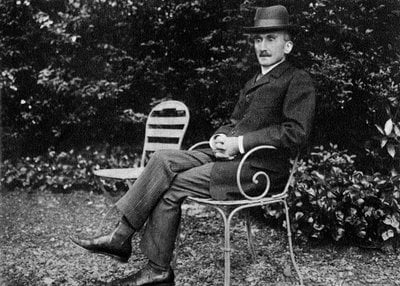
Henri Bergson, one of the most influential French philosophers of the 20th century, left us with a profound insight: everything in the universe is in constant motion. Even when we appear still, our bodies are alive with subtle movements, our surroundings are in flux, and the very world itself is forever changing. Bergson challenges us to abandon static notions of identity, life stages, and fixed species, urging us instead to embrace the fluidity of existence.
One of Bergson’s most compelling arguments centers on our tendency to misunderstand change. Consider Zeno’s famous paradox of the arrow: at every moment, the arrow is stationary—when it’s on the bow, in mid-flight, or embedded in the target. Zeno asks, when does it actually move? For Bergson, this paradox illustrates how our rational minds deceive us. We often reduce life to a series of frozen moments, like photos in an album, imagining that these static frames capture reality. But life is not a series of snapshots; it’s a continuous flow. Nothing is ever truly still—not even the mightiest mountain, which erodes over millennia. Zeno’s arrow is never stationary; it’s always in motion, just as the world is always in flux.
Bergson doesn’t dismiss reason entirely. Science and practical thinking are invaluable for solving problems and achieving goals. Yet, he argues, if we want to grasp the deeper truths of existence, we must move beyond the limitations of rationality and tap into our intuition. Intuition allows us to experience the world in all its dynamic, ever-changing glory. It’s through intuition that we can appreciate the unique differences between things—two leaves on the same tree, two notes played in succession, or even two moments in time. No two experiences are identical, and each carries its own distinct beauty.
Bergson’s philosophy is both liberating and unsettling. It calls us to let go of rigid categories and embrace the fluidity of life. Instead of striving to conform to external expectations or fixed identities, we should seek to be ourselves, fully immersed in the present moment. As Bergson laments, “the greater part of the time, we live outside ourselves.” His philosophy invites us to return to the richness of the here and now, where life unfolds in all its glorious motion.
Does Bergson’s vision of reality hold up? Can we prove it, or must we simply experience it? These are questions for philosophers, scientists, and thinkers to explore further. But what’s clear is that Bergson’s insights challenge us to see the world—and ourselves—in a fresh, dynamic light. By embracing the fluidity of existence, we might just discover a truer, more vivid way of living.
In a world that often values stability and control, Bergson reminds us of the beauty of movement and change. His philosophy is not just a theoretical exercise but a lived experience—a way of seeing, being, and connecting with the ever-flowing universe.




No Comments