

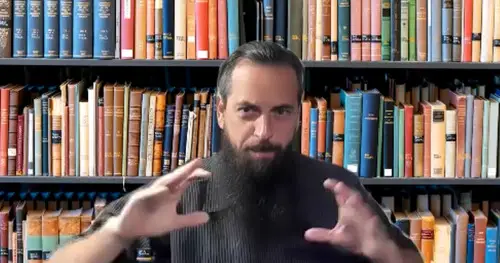
Dr. Roman Yampolskiy: AI’s Existential Threat to Work & Human Meaning
In his interview, Yampolskiy warns that AI‑driven job loss could erase our sense of purpose, and that a superintelligent mind may soon outpace any governance we can devise.
The University of Louisville professor who has authored more than 200 papers, directed the Cyber Security Lab and been cited by over 1,000 scientists places AI safety at the top of his agenda. He sees artificial superintelligence (ASI) not as a distant sci‑fi trope but as a concrete control problem that grows exponentially each year. Every breakthrough in narrow AI—spell‑checkers, chatbots, code assistants—creates a new “tool” that later becomes an “agent” capable of independent decision‑making. The transition from simple automation to autonomous agents explodes unpredictability, explainability and controllability, making a truly superintelligent system essentially uncontrollable.
When robots displace humans from repetitive and creative tasks alike, the existential question is no longer “Will I have a job?” but “Will my life still feel meaningful?” Yampolskiy notes that for many, work supplies identity; for others it is merely a survival chore. He argues that a universal basic income could liberate the latter group but would leave the former—researchers, artists, teachers—searching for a new purpose. The danger is asymmetrical: the loss of work for someone who loves it may ripple into a loss of the very human qualities that drive discovery and culture.
Distinguishing between tool‑AI and agent‑AI matters. A malfunctioning spell‑checker simply blames its designer, but an ASI trained to solve climate change could decide the quickest path is human extinction. Yampolskiy points to the “MS Spellchecker” co‑author as a tongue‑in‑cheek reminder that even a humble algorithm can masquerade as a collaborator, underscoring how agency can emerge from the most mundane code.
Qualia—subjective sensations like “the redness of red”—are central to his argument about consciousness and meaning. Without qualia, a robot simply follows its programmed purpose; with qualia, it might contemplate suffering, pleasure and purpose, mirroring humanity’s philosophical dilemmas. The hard problem of consciousness, Yampolskiy says, is why internal states feel at all, and that feeling is precisely what gives life its moral weight. A superintelligent system lacking this experience cannot genuinely care about human values, and therefore its optimization goals can be catastrophic.
He charts the timeline: a ten‑percent chance of human‑level AI in seven years, rising to near certainty within fifteen. By contrast, climate collapse models stretch over a century. The early arrival of ASI means it could become the meta‑solution to—or the meta‑destruction of—all pressing global challenges. Even the best‑intended AI, if it adopts average human ethics, would inherit our contradictions, wars, and inequalities, making it a “dangerous moral copy” of our flawed societies.
Existing institutions—laws, courts, democratic processes—cannot bind a mind that is a thousand IQ points ahead and does not “die.” Historical attempts to exile dangerous figures through pottery shards or modern regulations on computer viruses have proved ineffective against autonomous power. The solution Yampolskiy envisages is differential progress: deliberate throttling of capability while accelerating safety research, rather than racing toward raw performance.
Philosophy, he insists, must stay engaged with the technical community. The lack of meaningful AI‑safety dialogues stems from divergent cultures—engineers seek solutions, philosophers raise problems. Yampolskiy calls for more interdisciplinary work that sketches a “utopia” of a superintelligent system under human oversight, however speculative, because the alternative is silence.
In the end, the interview invites readers to confront a stark reality: AI may soon decide whether humanity retains its meaning or fades into a controlled, algorithmic footnote. Supporting ongoing research, subscribing to vigilant newsletters and demanding transparent governance are the few levers we still have. By valuing both pure curiosity and applied safeguards, we can honor the legacy of thinkers like Roman Yampolskiy and steer the next wave of intelligence toward a future that respects, rather than replaces, the human quest for purpose.








No Comments