

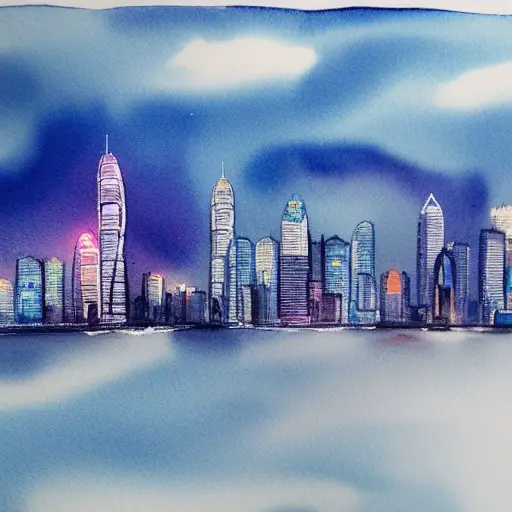
AI Art: Beauty Beyond the Algorithm?
Can an algorithm truly capture the essence of a sunset or the soul of a painting?
The rise of AI image generators like Stable Diffusion has ignited a fierce debate about the nature of creativity. By training on millions of images, these programs learn to associate prompts—like “a T-Rex in Dali style”—with visual elements, combining them into unique compositions. However, the results are a study in contrasts. While abstract interpretations often yield stunning, cohesive visuals, the technology struggles with the fine details of realism, particularly human faces. This triggers the “uncanny valley” effect, revealing that AI lacks a true understanding of anatomy and context.
Critics argue that true art requires emotion and intent, qualities an algorithm seemingly lacks. Yet, this perspective overlooks several truths. Much of human art is functional—think wallpaper or background music—devoid of deep emotional weight. Furthermore, an AI’s output is trained on human emotion, and the viewer’s interpretation ultimately defines the art’s impact. A generated image of two figures in desolate landscape can evoke profound melancholy, proving that meaning is not strictly dictated by the creator’s intent, but also by the observer’s gaze.
Ultimately, AI art challenges our definitions of creativity. It excels at stylistic mimicry and abstract beauty but falters at the nuances of reality. Whether we view it as a tool or a competitor, its ability to evoke emotion suggests that the definition of art is evolving alongside the technology.







No Comments