


Anthropic’s Compute Crisis: Inside the AI Giant’s Battle for Scalable Infrastructure
The AI driving your next chatbot or coding assistant now requires more compute power than ever—and Anthropic is racing to keep up.
In a move signaling the intensifying race for artificial intelligence dominance, Anthropic has secured a landmark compute agreement with tech titans Google and Broadcom. This partnership underscores how demand for AI processing is outpacing supply, forcing even the most advanced AI labs to rethink their infrastructure strategies.
## The Deal: Power Behind the Prompts
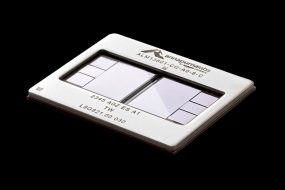
While specifics remain limited, the multi-year deal positions Google Cloud and Broadcom as critical partners in scaling Anthropic’s Claude models. Google’s Tensor Processing Units (TPUs) and Broadcom’s custom chips will help fuel Anthropic’s push into enterprise AI, where compute demands skyrocket with every new application—from legal research to software development.
This isn’t just about more servers. It’s about securing the raw horsepower needed to train and deploy next-gen AI systems efficiently and affordably. As generative AI shifts from novelty to necessity, having flexible, high-performance infrastructure is no longer optional—it’s the battleground.
## Why This Matters for the AI Ecosystem
Compute isn’t just a technical detail—it’s the foundation of modern AI. Every prompt you send to an AI model, every line of code it generates, or every analysis it performs, requires processing power measured in petaflops. And unlike traditional software, AI models get more demanding over time. Larger models, longer contexts, faster response times—all of it multiplies the compute load.
Anthropic’s deal reflects a broader trend. OpenAI partners with Microsoft Azure, Meta leans on NVIDIA and AWS, and now Anthropic aligns with Google and Broadcom. The common thread? These aren’t just vendor relationships—they’re strategic lifelines.
For smaller players, the challenge is even steeper. Building proprietary data centers or designing chips from scratch costs billions. That’s pushing many AI startups to adopt a hybrid approach—mixing cloud services with niche hardware to optimize cost and performance.
## The Race Isn’t Just for Market Share—It’s for silicon
At its core, this deal reveals how the future of AI hinges on semiconductor supply chains and data center capacity. Google’s TPUs offer Anthropic low-latency inference, crucial for real-time applications. Broadcom’s networking and chip expertise adds flexibility for training workloads. Together, they form a tailored stack designed to scale.
But the competition is fierce. NVIDIA dominates the GPU market, Amazon Web Services offers its own Trainium and Inferentia chips, and startups like Cerebras and Graphcore are betting big on specialized architectures. Even traditional cloud providers like IBM and Oracle are making plays in AI infrastructure.
What’s next for Anthropic? The deal likely accelerates development of Claude 4 and beyond, with improved reasoning, longer memory, and better multi-turn conversations. It also signals growing pains—the kind that come with rapid scaling. Expect more headlines about AI labs partnering with infrastructure stalwarts in the months ahead.
## Bottom Line: Infrastructure Is the New Moat
While open-source models and user-friendly interfaces grab headlines, the unsung heroes of the AI boom are the engineers building the pipelines and the partnerships keeping AI humming. Anthropic’s compute alliance isn’t just about horsepower—it’s about staying relevant in a world where the only limit is how fast you can process the next prompt.
As AI becomes the new operating system for business and creativity, whoever controls the infrastructure will increasingly define who thrives—and who lags behind.





No Comments