

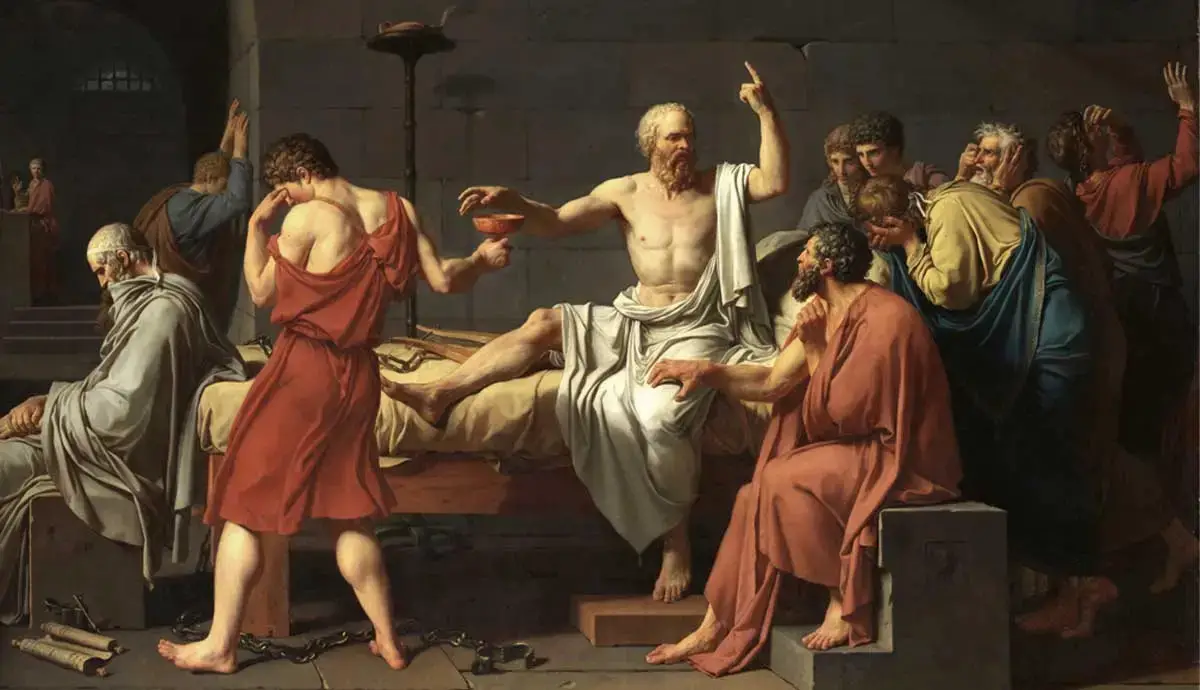
The Unbreakable Philosophical Courage of Socrates
Socrates proved that true wisdom is knowing you know nothing—and he paid for it with his life.
In an age of curated personas and performative intellect, the ancient trial of Socrates offers a stark, timeless lesson on the courage to question. Plato’s Apology is not merely a historical record; it is the foundational blueprint for philosophical integrity in the face of a hostile establishment. Writing as a court reporter, Plato captures the moment Socrates stood before 501 Athenian jurors in 399 BC, refusing to perform the “pitiful dramatics” of a typical defendant. Facing the death penalty for “corrupting the youth” and heresy, the scruffy, shoeless philosopher rejected the theater of the courtroom.
Instead of begging for his life, Socrates declared he deserved a state pension for the service of waking Athens up. He adopted the persona of a “gadfly,” a persistent irritant biting the lazy horse of the state to keep it alert. Socrates argued that his relentless questioning exposed the ‘hole in the doughnut’—the uncomfortable truth that the so-called wisest men of Athens, bolstered by reputation and rhetoric, actually lacked true knowledge of justice or beauty. His accusers, often trained by sophists to prioritize winning arguments over finding truth, were humiliated by his logical rigor.
The verdict was death. Yet, the Apology stands as a victory for the examined life. Socrates chose physical death over the spiritual death of silence and conformity. He teaches us that a distracted, uneducated society is easily manipulated, while a mind committed to critical thinking is the ultimate defense against tyranny. In a world obsessed with wealth and optics, Socrates reminds us that excellence of the soul is the only possession worth defending.
Inspired by the analysis of Gregory Harms, a scholar of moral and political philosophy.






No Comments