

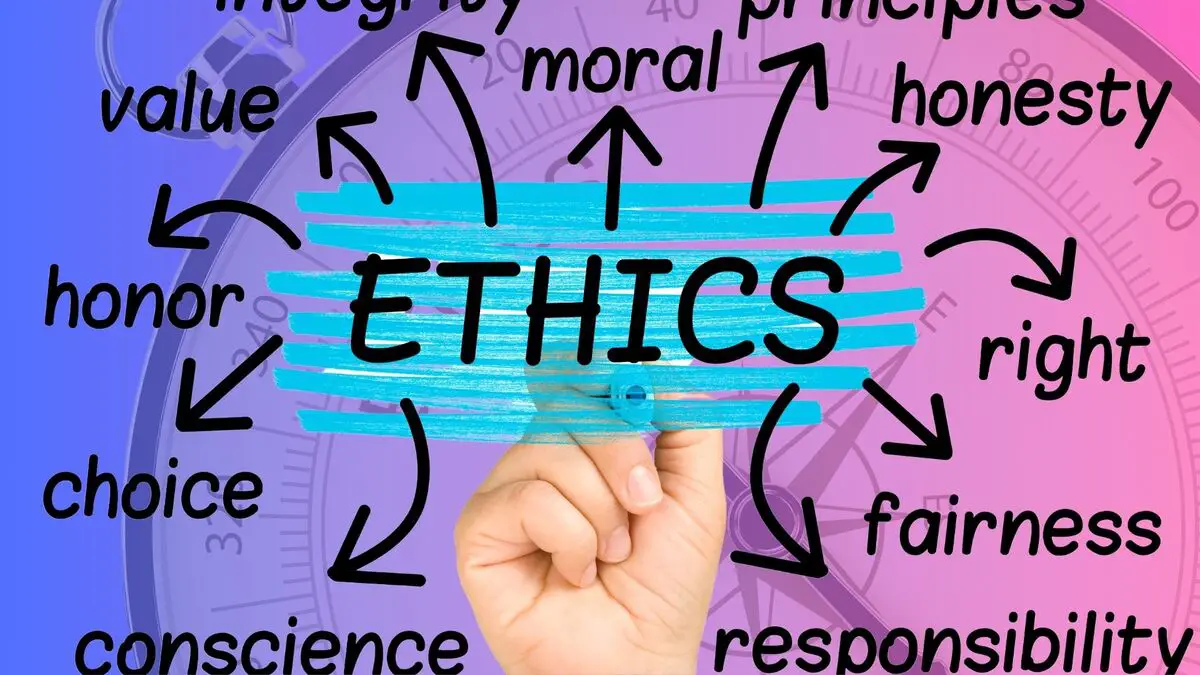
In the realm of philosophy, ethics stands as a fundamental field that seeks to discern which actions are morally right or wrong. This inquiry into the nature of morality is not merely an intellectual exercise, but a crucial aspect of human life, as it guides our decisions and interactions with others. The question of what constitutes ethical behavior is complex and has been approached from various philosophical perspectives, including utilitarianism, Kantian ethics, social contract ethics, and virtue ethics.
At its core, ethics is about distinguishing between good and bad actions, a distinction that is not always clear-cut. For instance, telling the truth is generally considered good, while stealing is seen as bad. However, circumstances can arise where telling the truth might be hurtful, or stealing could be justified, such as stealing a terrorist’s bomb to prevent harm. This complexity underscores the need for a deeper understanding of what makes an action morally right.
One might argue that following the law is sufficient for ethical behavior. However, laws can be immoral or fail to account for situations where illegal actions might be morally justifiable. For example, driving through a red light to rush a injured child to the hospital could be seen as morally excusable despite being illegal. Similarly, legal actions, such as tax avoidance by large corporations, can have immoral consequences, such as depriving the underprivileged of essential services funded by taxes.
Philosophers have developed various theories to address these ethical dilemmas. Utilitarianism, advocated by Jeremy Bentham and John Stuart Mill, posits that an action is morally right if it maximizes happiness for the greatest number of people. However, this theory faces challenges, as it can lead to the sacrifice of individual rights for the greater good, and the calculation of happiness can be problematic.
Immanuel Kant’s ethics offer an alternative, focusing on the motivation behind an action rather than its outcome. Kant argues that an action is morally right if it is based on a “good will” and if it could be universalized as a moral law. He also emphasizes the importance of treating individuals as ends in themselves, rather than mere means to an end. While Kant’s theory provides a strong foundation for respecting individual rights, it can be overly rigid, suggesting that certain actions are always wrong, regardless of the circumstances.
Social contract theories, inspired by thinkers like Hobbes, Locke, and Rousseau, propose that moral rules are established to facilitate harmonious living within a society. These rules are justified because they allow individuals to flourish in a way that would not be possible in a state of nature, where life is “solitary, poor, nasty, brutish, and short.” However, social contract theories face challenges in defining the scope of the social contract, particularly in the context of international relations and global ethics.
Lastly, virtue ethics, rooted in Aristotle’s philosophy, shifts the focus from specific actions or rules to the character of the individual. It suggests that living a virtuous life, cultivating traits like honesty, kindness, and fairness, is the key to achieving true happiness and fulfillment. Virtue ethics emphasizes the importance of balance and context, recognizing that what is virtuous can vary depending on the situation.
In applying these ethical theories to real-world problems, such as illegal downloading, abortion, or euthanasia, the complexity of ethical decision-making becomes apparent. Each theory offers insights but also faces limitations. Ultimately, ethical decisions require a nuanced consideration of the situation, taking into account the motivations, consequences, and character of the individuals involved.
The study of ethics is not merely an academic pursuit but a vital component of human existence. It challenges us to think critically about our actions and their impact on others, encouraging us to strive for a life of virtue, respect, and compassion. As we navigate the intricacies of ethical dilemmas, we are reminded of the profound importance of philosophy in guiding us toward a more just, empathetic, and fulfilling life.
https%3A%2F%2Fdaily-philosophy.com%2Fshort-guide-to-ethics%2F






No Comments