

The future of space technology is unfolding at a rapid pace, with innovators like Varda Space Industries CEO Will Bruey predicting a future where multiple spacecraft will zoom towards Earth every night, carrying pharmaceuticals manufactured in space. This may seem like a distant dream, but Bruey’s experience as an engineer at SpaceX has given him a unique perspective on the potential for exponential growth in the space industry. He recalls the early days of SpaceX, where the concept of reusable rockets seemed like a far-off fantasy, only to become a reality with the successful completion of nearly 600 missions by the Falcon 9 launch vehicle.
Varda has already made significant strides in proving the core concept of manufacturing pharmaceuticals in space. In February 2024, the company became only the third corporate entity to bring back materials from orbit, joining the likes of SpaceX and Boeing. The company’s W-1 capsule, a small, conical spacecraft, has successfully manufactured crystals of ritonavir, an HIV medication, in microgravity, allowing for more precise control over crystallization and potentially leading to better stability, greater purity, and longer shelf life for drugs.
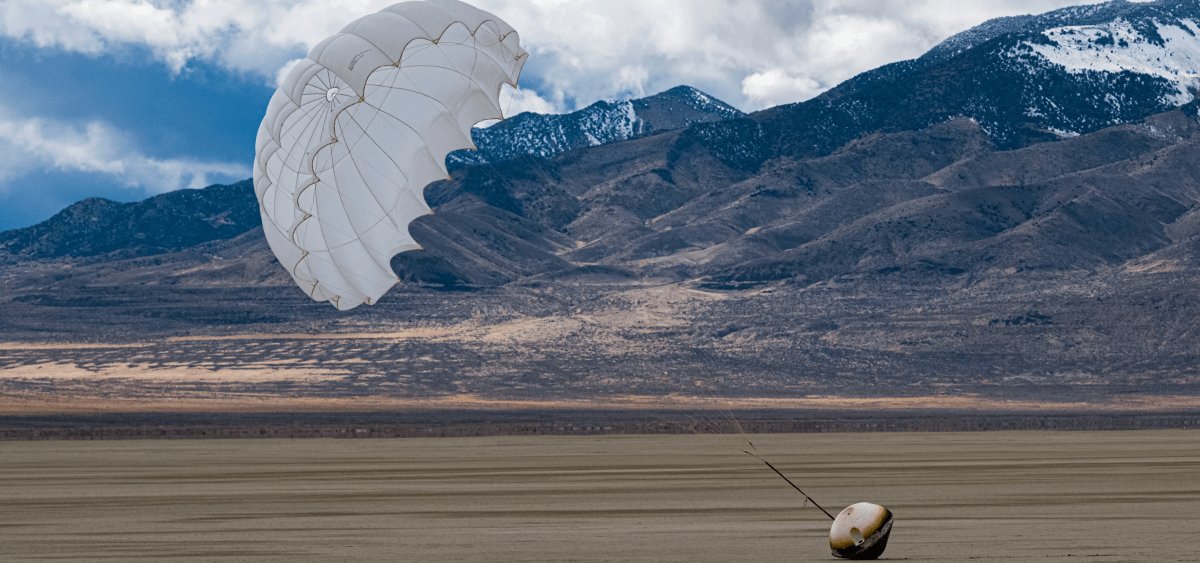
The process of manufacturing pharmaceuticals in space is not a quick one, taking weeks or months to complete. However, once the process is complete, the capsule detaches from the spacecraft bus and plunges back through Earth’s atmosphere at over 30,000 kilometers per hour, reaching speeds above Mach 25. A heat shield made of NASA-developed carbon ablator material protects the cargo inside, and a parachute brings it down for a soft landing.
Bruey emphasizes that the actual business of Varda is not about space, but about creating a “magic oven” where formulations can be created that otherwise couldn’t be. The company is not discovering new drugs or creating new molecules, but rather expanding the menu of what can be done with existing, approved drugs. This is not speculative science, as companies like Bristol Myers Squibb and Merck have been running pharmaceutical crystallization experiments on the International Space Station for years, proving the concept works.
Two key factors have changed in recent years, making Varda’s business model viable. Firstly, space launches have become bookable and predictable, allowing the company to plan and schedule launches in advance. Secondly, end-to-end space service companies like Rocket Lab have started producing satellite buses that can be purchased off the shelf, making it easier for Varda to integrate its pharmaceutical manufacturing capsules with them.
Varda’s business model is unique in that it requires perpetual launch, with each drug formulation requiring manufacturing runs, which in turn require launches. This creates a predictable and scalable demand for launch providers, helping to justify the fixed costs of launch infrastructure and driving down per-launch prices. Bruey’s “seven domino theory” predicts that as Varda scales, costs will drop, making the next tier of drugs economically viable, creating a virtuous cycle that will benefit not just Varda, but other industries that can utilize microgravity, such as semiconductors, fiber optics, and exotic materials.
However, Varda’s path to success was not without its challenges. The company’s first mission, launched in June 2023, remained stranded in orbit for six months due to regulatory issues, with the Utah Test and Training Range, where Varda wanted to land, not being a priority customer. The situation looked dire, but Bruey and his team persevered, eventually securing approval and landing the capsule in February 2024. This experience led to the development of a secondary business in hypersonic testing, with Varda offering an alternative to dedicated test flights that can cost upwards of $100 million each.
Investors are taking notice of Varda’s story, with the company raising $329 million in its Series C round, most of which will be used to build out its pharmaceutical lab in El Segundo. As Varda continues to push the boundaries of what is possible in space, it is clear that the future of pharmaceutical manufacturing, and indeed the space industry as a whole, is brighter than ever. With Bruey’s vision of a future where it is cheaper to send a working-class employee to orbit for a month than to keep them on Earth, the possibilities seem endless, and the “invisible hand of the free market economy” may just lift us off our home planet sooner rather than later.







No Comments