

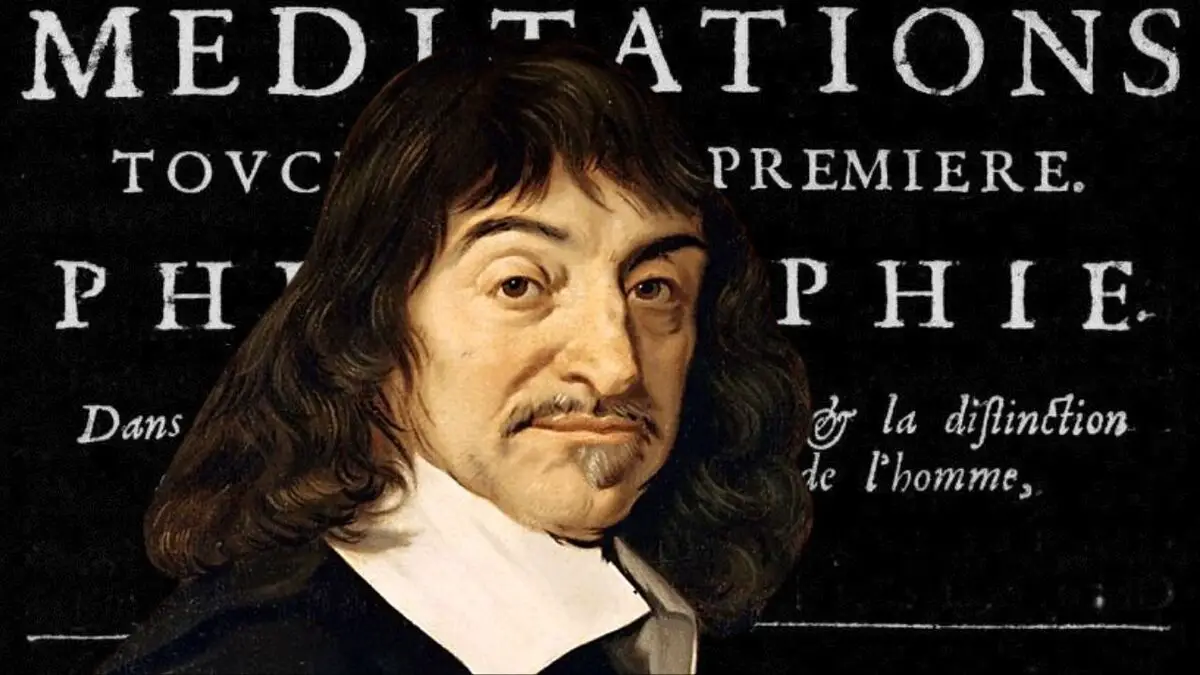
As we delve into the realm of philosophical inquiry, we find ourselves entwined in a complex web of thoughts, ideas, and perspectives. The Meditations of René Descartes, a foundational text in the history of philosophy, offers a profound exploration of the human experience, the nature of reality, and the existence of God. Despite being written centuries ago, Descartes’s work remains a rich source of inspiration and insight, inviting readers to engage with fundamental questions about the human condition.
At the heart of Descartes’s Meditations lies a tripartite motivation: personal, political, and philosophical. On a personal level, Descartes sought to integrate his devout faith with his philosophical pursuits, ensuring that his metaphysical system included a place for God. Politically, he aimed to avoid the persecution faced by Galileo, whose heliocentric views had drawn the ire of the Church. Philosophically, Descartes endeavored to rescue the mind from the prevailing mechanical worldview, which threatened to reduce human existence to a mere cog in the machine of reality.
Through his Meditations, Descartes employs a systematic approach to doubt, questioning everything, including the existence of God. This radical skepticism allows him to rebuild his understanding of the world from the ground up, culminating in the famous declaration “I am, I exist.” This assertion marks a pivotal moment in the history of philosophy, as Descartes establishes the existence of the self as the sole certainty in an otherwise uncertain world.
The concept of the “piece of wax” serves as a powerful illustration of Descartes’s philosophical project. By subjecting the wax to various conditions, Descartes demonstrates that our understanding of the world is not solely derived from sensory experience. Rather, it is our intellect that enables us to grasp the underlying essence of reality, beyond the fleeting properties perceived by our senses. This idea resonates with the Platonic notion of a higher, eternal realm of being, where abstract concepts and forms reside.
Descartes’s proof for the existence of God, as outlined in the third meditation, relies on the idea that our innate grasp of perfection and infinity must have been caused by a perfect and infinite being. This argument, while complex and nuanced, underscores the philosopher’s conviction that our understanding of the world is rooted in a deeper, metaphysical reality.
The sixth and final meditation marks a turning point, as Descartes distinguishes between the mind and body, establishing a clear separation between the two. This dichotomy allows him to affirm the existence of God, who, as a non-deceiver, guarantees the reality of the external world. The implications of this idea are far-reaching, suggesting that our perceptions, while imperfect, are grounded in a fundamental reality that transcends the limitations of our individual experiences.
As we reflect on Descartes’s Meditations, we are reminded of the enduring power of philosophical inquiry to shape our understanding of the world and our place within it. Through his work, Descartes invites us to engage with fundamental questions about the nature of reality, the existence of God, and the human condition. As we navigate the complexities of our own existence, we would do well to heed the wisdom of Descartes, who, through his Meditations, offers a profound and lasting contribution to the philosophy of the mind.
https%3A%2F%2Fdaily-philosophy.com%2Fgregory-harms-meditations%2F





No Comments