

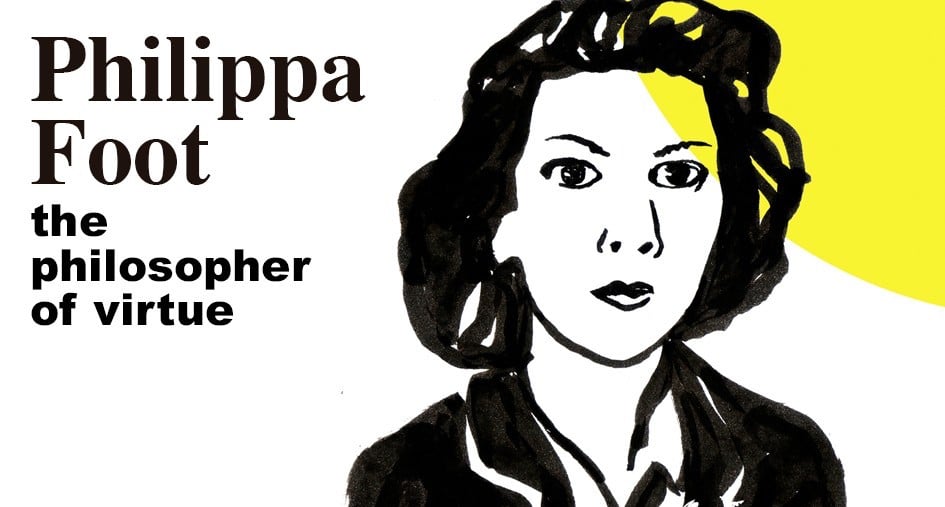
Philippa Foot and the Trolley Problem: A Moral Crossroads
Philosophers have long grappled with the complexities of ethics, and few have done so as provocatively as Philippa Foot. As a member of the influential “Oxford Quartet” alongside Elizabeth Anscombe, Iris Murdoch, and Mary Midgley, Foot left an indelible mark on moral philosophy. Her work, particularly her famous thought experiment known as the “trolley problem,” continues to challenge our understanding of right and wrong, shaping debates in ethics for decades.
The trolley problem, as Foot originally conceived it, presents a harrowing scenario: a runaway tram is barreling down a track, poised to kill five innocent people. You, standing nearby, have the power to flip a switch and divert the tram onto a separate track—where, unfortunately, one person stands in its path. At first glance, flipping the switch seems like a moral imperative; after all, saving five lives at the cost of one appears a straightforward calculus. Yet, Foot argued, the situation is far more nuanced. The ethical dilemma lies not in the numbers but in the nature of our action. Foot posited a profound distinction between doing harm and allowing harm to occur. To actively cause the death of one person, she contended, is morally different from passively standing by as five perish.
Foot’s philosophy hinges on the idea that there is a categorical difference between these two actions. While it may sometimes be justifiable to allow harm in order to achieve a greater good—a utilitarian perspective—doing harm, even with the best of intentions, is inherently wrong. This distinction has far-reaching implications for how we approach ethical decision-making, touching on issues of personal responsibility, the nature of intent, and the limits of moral agency.
Judith Jarvis Thomson, influenced by Foot’s work, further explored this problem, but it was Foot who first illuminated the moral complexity at its core. Her thought experiment remains a cornerstone of philosophical debate, urging us to confront the depth of our moral intuitions and the principles that guide them. As we navigate the intricate landscapes of ethics—whether in personal life, policy-making, or theoretical philosophy—Foot’s insights remind us that the line between doing and allowing is not merely semantic but deeply moral.
In the end, the trolley problem challenges us to think critically about the choices we face and the principles that shape them. Philippa Foot’s enduring legacy lies in her ability to distill the complexity of ethics into a single, powerful question—one that continues to provoke, unsettle, and inspire us to this day.







No Comments